Wednesday, June 19, 2013

Salinger

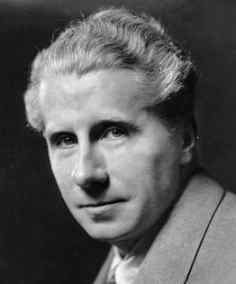
This looks interesting...the Weinstein Company will be releasing a documentary later this year on the mysterious life of J. D. Salinger.  Known the world over for his influential novel, The Catcher in the Rye, Salinger became a recluse in his later years and lots of mystery surrounds that time as well as what other writings he might have created.  While I haven't personally read this novel, it is impossible to ignore the affect it has had on our culture over the last 50 years.  Check out the trailer here.


Wednesday, June 12, 2013

The Monuments Men

The art world realized that Germany’s powerful weapons, and especially its use of massive aerial bombardment, had suddenly made the bulk of the continent’s great artistic masterpieces susceptible to destruction. 

Those of us lucky enough to have visited the great cities of Europe will never forget the incredible art and architecture to be found there.  From magnificent cathedrals to priceless paintings, we are constantly bombarded by the masterpieces of Western art.  But so often we take their existence for granted.  We forget that it is nothing short of a miracle that they are even still here for us to see.  They are here due to the efforts of a few courageous men and women who faced down the greatest cultural thieves in history and risked their lives to restore it to us.  In his book The Monuments Men: Allied Heroes, Nazi Thieves, and the Greatest Treasure Hunt in History, Robert Edsel tells the story of these brave people and gives an even greater appreciation for the art treasures that populate the museums and streets of Europe.

I have long had an interest in World War II and am no stranger to the many different stories surrounding this troubled period.  But until I read this book I had no idea that there were people whose sole mission during the war was to protect and recover the art treasures of Europe.  I first heard about this book when Rick Steves interviewed the author for his radio program, and I am so happy that I read it because it is a fascinating story.  What is perhaps most remarkable about this group of individuals (collectively termed the Monuments, Fine Arts, and Archives section) is that these were not hardened soldiers, but rather ordinary citizens.  Art historians, artists, and museum curators who volunteered to serve even though most of them were older than the average soldier.  Many of them could have had comfortable desk jobs or even stayed out of the war all together, but they gave it up to serve their country and save Western culture.

But though their motives were noble, the task before them was far from easy.  They usually worked on their own, rarely having the chance to communicate with other Monuments Men.  They had no real commander and had to rely on their own knowledge and wits to complete their mission.  They even lacked the basic equipment to complete their tasks like typewriters, signs, and vehicles.  And they were constantly at odds with other members of the armed forces who had no intention of changing their way of doing things to spare a small village church, no matter how important.  Perhaps no one in this book had it tougher than Jacques Jaujard and Rose Valland, curators of the Louvre and Jue de Paume respectively, who had to work under the watchful and suspicious eyes of the Nazis.

The importance of their task becomes clear early on as this is not just about saving individual works of art, but about rescuing a millennium of European culture from almost certain destruction.  Some pieces like the Madonna of La Gleize had significance beyond their value as art and served as a comfort to the downtrodden people of occupied villages.  Perhaps what moved me the most was how these men didn't just look out for the culture of the occupied nations, but also for that of Germany itself.  Despite the hatred and disgust they had for the Nazis, they knew that German culture was worth saving and they set their own feelings aside to complete the task.  Edsel stresses this idea of saving culture because it is sorely needed in the wars of today.  Unfortunately, our army did not remember the ideas of the Monuments Men when Iraq was invaded and many priceless pieces of Iraqi culture were stolen or destroyed.  Hopefully, this story will become more well known and teach us all the respect we should show another culture, even when it belongs to our enemy.

As I read the stories of the many buildings and works of art that these men helped save, I couldn't help but place it in the context of my own travels.  I remembered walking the corridors of the Louvre and standing inside Aachen Cathedral, totally captivated by what my eyes were seeing.  And yet my experience would not have been possible without the work of these courageous men.  We are so lucky that these treasures are still here to awe and inspire us.  I highly recommend this book for those interested in art, World War II, and European culture in general.  You will certainly gain an appreciation for the work that was done.

The Movie:

Later this year, a film version of this book will be released.  It will star George Clooney, Matt Damon, John Goodman, Cate Blanchett, Bill Murray, Jean Dujardin, and Hugh Bonneville.  I have to say that this is one film I am really looking forward to.       

Sunday, June 9, 2013

“Do not read, as children do, to amuse yourself, or like the ambitious, for the purpose of instruction. No, read in order to live.”

-Gustave Flaubert

Wednesday, June 5, 2013

The Prisoner of Zenda

“For my part, if a man must needs be a knave I would have him a debonair knave... It makes your sin no worse as I conceive, to do it à la mode and stylishly.” 

In 1894, British author Anthony Hope published a slim adventure novel that would become an instant success and define a literary genre for decades to come.  The Prisoner of Zenda would set the type of the Ruritanian romance, stories set in a fictional country (usually in Eastern Europe) revolving around the aristocracy and devoted to such themes as honor, loyalty, and love.  Praised by such authors as Robert Louis Stevenson, Hope's novel remains well-known to this day and is considered by many to be a minor classic of English literature. 

The Plot:

Rudolf Rassendyll is a somewhat idle young man who is a member of English nobility.  After being chastised for his laziness by his sister-in-law, Rudolf decides to visit the Ruritania, a small country in Eastern Europe whose royal family is illegitimately linked to his own.  He arrives on the eve of the coronation of the new king (also named Rudolf), and chances to meet the royal while walking in the woods.  The resemblance between the two is uncanny and even the king's own advisers initially mistake Rassendyll for the king.  

That night, the king is treacherously kidnapped and imprisoned by his half brother, Prince Michael, in an attempt to stop the coronation and have himself crowned instead.  The king's attendants convince Rassendyll to impersonate the king and be crowned in his place.  Various complications occur as Rassendyll attempts to rule the land, rescue the king, and woo the beautiful Princess Flavia.  Rassendyll soon finds himself tempted to retain the power that has been thrust upon him, and must summon all of his honor and courage to save the country.

My Review (Caution-Spoilers):

I love a good swashbuckler.  Whether it is a flight through the heather like in Stevenson's Kidnapped or sailing the high seas with pirates as in Sabatini's Captain Blood, there is nothing to get your heart racing like a well told adventure story. 

And that is exactly what The Prisoner of Zenda is.  All of the classic elements of a swashbuckler are here.  Our hero at first seems to be a calm, quiet man who doesn't get involved in anything too strenuous.  But when he finds himself put to the test, he more than rises to the occasion with his wit, talent, intelligence, and honor.  Our villain (not really Prince Michael in this case so much as his right hand man Count Rupert of Hentzau) is cunning and ruthless with a dash of charm.  And the romance between our hero and Princess Flavia is passionate and honorable (though doomed, unfortunately).  It is no wonder that lovers of adventure find this to be a satisfying read.

But while it is classic and satisfying, it doesn't quite reach the heights of the novels mentioned above.  It is a very simple story that isn't given as much length or development as some other novels of it's kind.  Our characters don't have quite the depth to really make them leap off of the page.  Princess Flavia is one in particular that could have been a really outstanding heroine with a bit more polish and depth.  It is still a very enjoyable novel, just don't expect it to be as amazing as the works of Stevenson.

For those times when you need to lay down your heavy literature and set off on an adventure, you could certainly do worse than The Prisoner of Zenda.  It is a fun novel that certainly deserves it place on the list of novels everyone must read.  I suggest this one as a read aloud for the whole family that will help teach them about how doing what is right is more important that fulfilling your own desires.

The Movie:

This is one of those stories that was meant for the screen.  There have been numerous adaptations over the years, but two in particular stand out.  The first is considered by many to be the most definitive.  Released in 1937, it stars Ronald Colman, Madeleine Carroll, David Niven, and Douglas Fairbanks, Jr. 

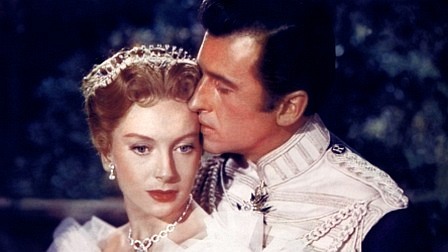
The 1952 version is almost exactly the same shot for shot.  It stars Stewart Granger, Deborah Kerr, Jane Greer, and James Mason.  Either one is an excellent way to enjoy this classic story on your TV.            

Sunday, June 2, 2013

Book Party

Looking for something fun and bookish to do this summer and fall?  Love hobnobbing with your favorite authors, book vendors, and other readers?  Looking to snag a few new reading gems for your collection?  Look no further than an annual book festival.  No matter where in the world you live, chances are good that there will be a book festival of some sort happening near you.  Here's a glimpse at some of the various opportunities you have to celebrate books, reading, and the written wor
d in general:

  • Book Expo America: This conference happens every year at the end of May/beginning of June in one of America's major cities (it was in NYC this year).  It is a conference mainly for the book publishing and services world and only people in those fields can attend the entire event.  However, they have recently opened up the final day of the expo to the general public (Power Readers).  It is a chance for you to meet some of your favorite authors, check out what new books are on the horizon, chat up with various publishing and self-publishing companies, and load yourself down with lots of giveaways and merchandise.
  • The National Book Festival: America's largest book festival happens on the National Mall every September.  This year's dates are September 21-22.  It is an opportunity to not purchase books, but to interact with some of America's most famous authors through book signings and readings.  Some of the authors at this year's festivals include Richard Paul Evans, Phyllis Reynolds Naylor, Margaret Atwood, Khaled Hosseini, and many others.  One plus to this festival is that you do not have to purchase a book there for an author to sign, you can bring your own.
  • Edinburgh International Book Festival: If you happen to find yourself across the pond in August, head north to the home of Stevenson, Burns, and Scott to celebrate books from around the world.  Over 800 authors are involved in around 750 different events during this two and a half week festival.  There are two huge bookstore tents, one for adults and one for kids, where you can load up on all kinds of goodies.  I think this one is definitely going on my bucket list.
 You can find information on other various festivals and publishing events here.  Festivals like these are an amazing way for readers all over the world to share the passion we have for books.  Do you have a favorite festival or book event?  Share it here!
Sunday, May 26, 2013

Mary Anne

She thought of her vestal virgins in Boulogne and George in his regimentals, stiff and pompous, and suddenly none of them mattered, not even George; she was home where she belonged, in the heart of London.

In 1954, British author Daphne du Maurier turned from her Gothic romances like Rebecca and My Cousin Rachel and instead wrote a fictionalized account of her great-great-grandmother.  She tells of political intrigue, scandal, and revenge during the Napoleonic wars.  But more than anything she tells the story of a woman who overcomes her poor Cockney upbringing to find herself holding power over some of Britain's most influential men.

The Plot:

Born into a poor London family, Mary Anne Thompson grows up having to use her quick wit and feminine charms to keep her family off of the streets.  At a young age she impetuously marries Joseph Clarke who ends up being a gambling alcolholic with no sense of duty to his family.  Disgusted and desperate to keep her family fed, Mary Anne leaves Joseph and supports them all be "entertaining" men of position and wealth.  Eventually, she finds herself mistress to Frederick, Duke of York and living in style.

But the Duke does not understand money and Mary Anne has a hard time keeping up with the massive debts incurred to obtain her lavish lifestyle.  With war looming and many young men eager to obtain commissions in the Army, she begins using her influence with the Duke to help get them (for a fee, of course).  All seems to be going well until the Duke tires of her.  When she finds herself on the brink of ruin, she determines that she will have her revenge on the men who have "used" her and brings about one of the largest scandals in British political history.

My Review (Caution - Spoilers):

I have been a fan of Daphne du Maurier's work for a few years now.  This story intrigued me partly for it's plot, and partly because it is based on fact and the author's own family.

As it's title says, this is Mary Anne's story.  There seem to be two sides of her that is portrayed in the novel.  The first is her indomitable spirit and her ability to play the game in a man's world.  From the beginning she is unwilling to give up.  Even when fate seems to have her beat, she goes down swinging and many times finds herself back on top.  Her family is her ultimate prize and most of what she does is to get them the best food, the best houses, and the best future that she possibly can.  But it is this very ambition that ultimately becomes her downfall.  She refuses to settle, even though she could have saved herself quite a bit of grief by knowing when to walk away.  So many times she could have had settled down and had love and basic comfort, but her desire for security drives her on and on to ruin.

While most of the right ingredients were there (interesting plot, historical fact, lively characters), du Maurier just didn't seem to be able to quite bring it all together.  The storytelling lacks the emotion of her other works, and it becomes fairly tedious at times.  Mary Anne is not an easy character to like, and thus you aren't too disappointed by her eventual fall from grace.  It isn't a bad book, it just isn't as gripping as some of her other works.

This is a book that you could take or leave.  If you are a du Maurier fan you will probably read it, just don't expect the greatness of Rebecca.  If you haven't yet read any of her works, I would not suggest you start here.  I didn't love it, but it did have some good points that made it an interesting read.      

Wednesday, May 22, 2013

The Relevance of Libraries

A little over a week ago, an article was published in the Huffington Post that sent the literary world into a tizzy.  Michael Rosenbaum's article "What's A Library" questioned what use a brick and mortar building is in today's increasingly digitized world:

"Frankly, I will not miss the library.  Even though I lived right across the street from it for many years, I never went inside. I never sat in its reading room. I never checked out a book. I never explored its stacks to go through old volumes of bound periodicals in some research project.  Why would I do that?  Why, when I can order up pretty much anything I want online, any time I want. Admittedly, the library is free (thank you Benjamin Franklin for that concept), but the web is also free (at least so far), and instant and much much easier to reference and find stuff than in the stacks (though less romantic, in a literary sense)."

As you can imagine, that elicited an immediate and passionate response from the reading public.  Librarian Rita Meade followed up with an article defending the relevance of libraries in the 21st century:

It's really important to remember that just because YOU (general "you") don't need to use something on a daily basis, it does not mean that others don't need to use it. Not to mention the fact that accessing the web ISN'T free, and it's not always easier to "find stuff" on the web than in a library.

As someone who has used libraries all of my life, I can't help but defend them.  While Rosenbaum's argument has some validity (the internet does have a lot of information for free), it by no means captures the whole picture of what a library's role in the community is.  First off, not everything on the internet is free and internet access is not usually free.  There are many underprivileged citizens who simply cannot afford personal computers or internet service.  But they can freely access it at their library.  Secondly, not everything is on the internet.  I enjoy researching my family history, and I can tell you that there are many facts and secrets buried in local libraries that you would never come across on the internet.  Finally, the library is a community experience.  Many libraries host classes, exhibitions, and other events that bring citizens together in a communal experience.  In my mind, libraries are repositories of knowledge, bringing together information from across all mediums (print, digital, and audio/visual) for us to access in one easy and free place.  And this report shows that Americans (or at least New Yorkers) are taking advantage of it more than ever.

What do you think?  Do libraries still mean something in our culture?  Or have we moved beyond them?

Picture credit: "Librarian Shortage" by Pushart Megan Berkheiser